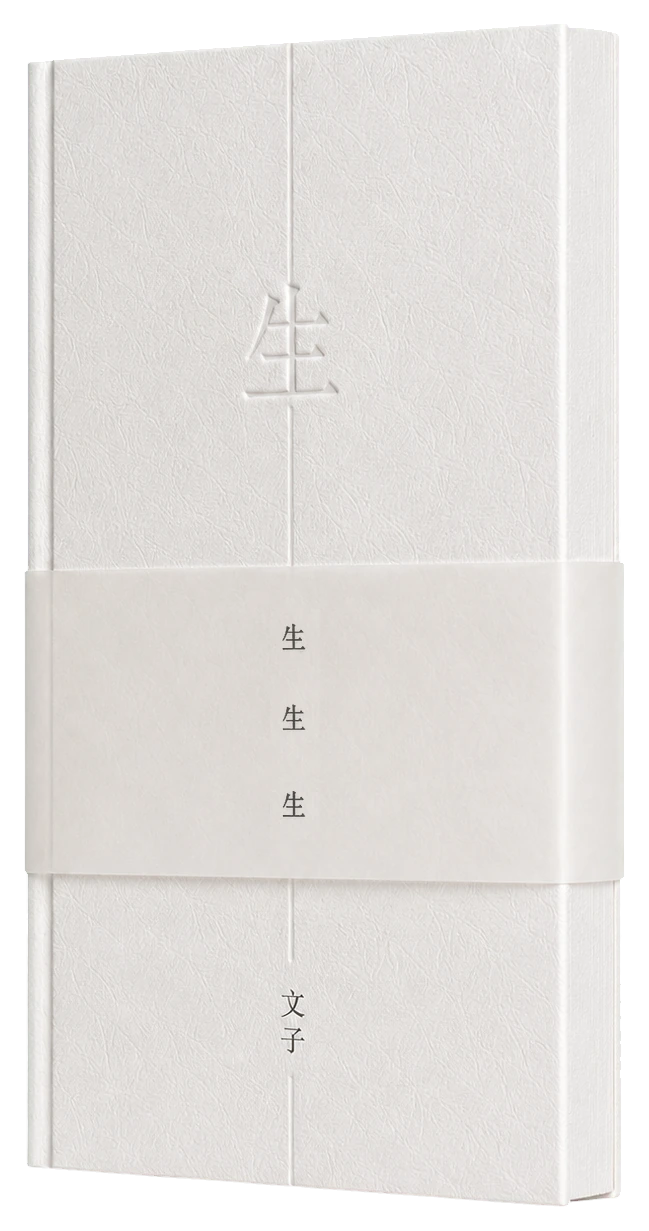
Becoming
Becoming is Wenzi’s work of thought in three volumes, nine chapters, and twenty-seven sections. “Its becoming is its being.” Through Sheng, Fen, Jian, Shi, and Xian it unfolds the differentiated world, and with “Sheng writes Sheng; Sheng reads Sheng” locates even its writing and reading within happening.
The full text, free to read online. Registered work. No resale or wholesale reproduction without permission.
Full introduction to the work
Becoming (《生》) | Wenzi | A Work of Thought
Sheng is not a motionless thing that begins moving later. It names being as happening itself.
Becoming speaks from happening itself. Neither a person who reaches a final state nor an outside agent who starts the world is its first condition. Change, thinking, writing, and reading belong to the same happening in distinct ways.
Its scope is not confined to human inwardness. Trees, stones, rivers, language, and awareness are not flattened into one homogeneous mass. Particular differences, conditions, relations, and consequences remain real.
“It is not that there is first something, and then its becoming. Its becoming is its being.”
This does not hide a cosmic actor called Sheng behind the many, or declare that every particular event has no cause. It refuses an external judge, initiator, or stationary ground positioned before happening as such.
In three volumes, nine chapters, and twenty-seven sections, the text moves through “Sheng Is Sheng,” self-arising, original non-differentiation, differentiation, co-arising, tendency, manifestation, the many bearers of one Sheng, and the continuing movement of Sheng. It asks how the many take distinct form without requiring a switch outside happening.
Sheng, Fen, Jian, Shi, and Xian are not five stages waiting for one another in clock time. The text maintains their simultaneity alongside a definite root-to-manifestation direction. Difference, relation, tension, and particular things retain their places.
Humans reflect upon themselves; rivers flow; trees grow under conditions; stones have their forms. Human reflection does not initiate these things, and the differences among them do not create an observer standing outside the whole.
Even the sentence “I now understand Sheng” is an occurrence. Becoming says that those who have not seen also have their own Sheng, and that an unboundness already present is merely made manifest by seeing through it. Understanding matters, yet it neither starts happening nor completes it.
At its close the text says: “This book was written by Sheng; the one reading it is also Sheng; what it writes about is Sheng. Sheng writes Sheng; Sheng reads Sheng.” Wenzi is still the author and a reader remains a particular person. This is a claim about their location within happening, not about another supernatural writer.
Becoming also addresses its reader directly and ends by inviting recognition. This is a real act of human experience, not the event that creates or completes happening. The world described neither begins nor becomes whole when someone finally understands it.
The book refuses to make Sheng into a new god, substance, or enlarged self. Yet its positive account of root, ground, self-arising, and the relation from root to manifestation remains: the name may be let go without cancelling the structure it describes.
Becoming is neither a slogan that absorbs the many into one abstraction nor a path requiring human attainment before reality can hold. It begins from happening itself and includes thought and expression among the world’s differences.
Its becoming is its being. Sheng writes Sheng, and Sheng reads Sheng; writing, reading, and their subject are happening.